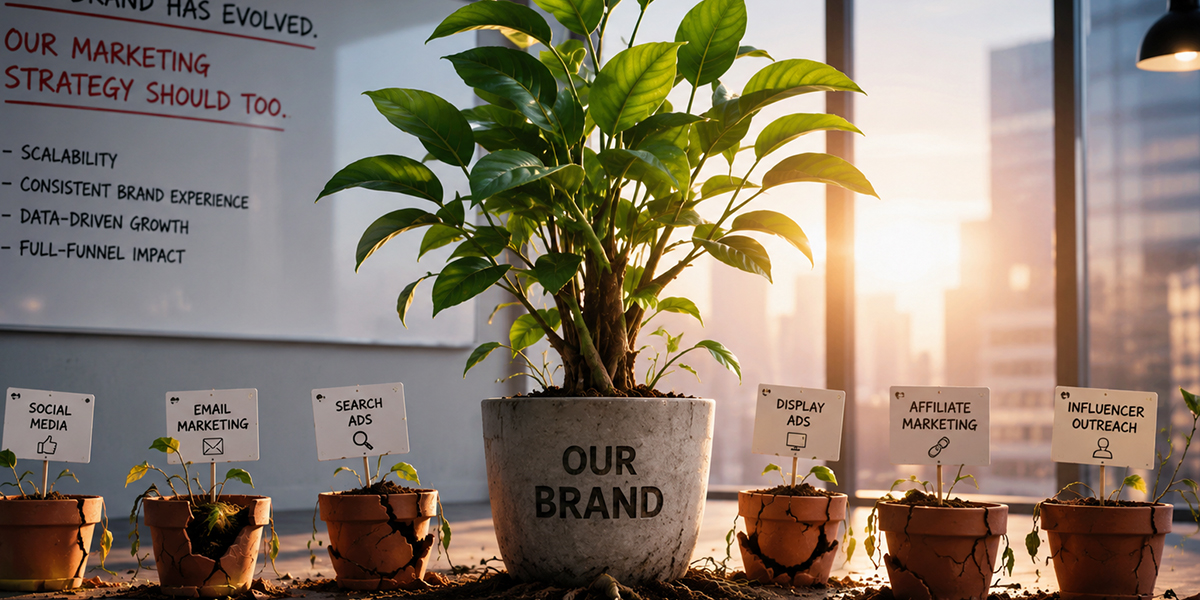
Marketing performance rarely depends on one channel, one campaign, or one conversion point. It depends on how well every part of the customer journey works together.
At Pinnacle Advertising, full-funnel strategy is treated as a connected planning and execution discipline, not a collection of isolated tactics. As a full-service advertising agency, Pinnacle specializes in connecting strategy, creative, media, analytics, and optimization across the full funnel so each part of the campaign works toward the same business goal.
Instead of treating awareness, consideration, and conversion as separate workstreams, a full-funnel marketing approach aligns each stage around shared business goals. For brands managing complex campaigns, multiple audiences, and competing priorities, that alignment can create stronger visibility, sharper execution, and more efficient growth.
What is Full-Funnel Marketing?
Full-funnel marketing is an integrated approach that supports customers across every stage of the decision journey.
That typically includes:
- Awareness: Introducing the brand, product, or service to relevant audiences
- Consideration: Building interest, trust, and engagement
- Conversion: Turning qualified audiences into leads, customers, appointments, visits, or sales
- Retention: Keeping customers engaged after the initial action
- Advocacy: Encouraging repeat business, referrals, and stronger brand loyalty
A full-funnel strategy does not mean every campaign must do everything at once. It means each campaign is planned with a clear understanding of how different touchpoints contribute to the larger customer journey.
Why Full-Funnel Strategy Matters for Marketing Performance
Full-funnel strategy improves marketing performance by aligning awareness, consideration, conversion, and retention around one connected plan.
Many marketing programs underperform because they are built in fragments. Media teams focus on channel efficiency. Creative teams focus on assets and messaging. Analytics teams focus on reporting. Internal stakeholders focus on immediate business needs. When these functions operate separately, the campaign may still launch, but performance becomes harder to manage.
A full-funnel strategy helps solve that problem by creating a shared framework before execution begins.
It clarifies:
- Who the campaign needs to reach
- What each audience needs to understand
- Which channels are best suited to each stage
- What creative message should appear in each environment
- How success will be measured
- Where optimization should happen over time
This is where a full-service advertising agency like ours can create meaningful value. By integrating media and advertising services within one connected strategy, brands gain a clearer path from planning to performance.
How a Full-Service Advertising Agency Supports Full-Funnel Marketing
A full-service advertising agency supports full-funnel marketing by connecting strategy, creative, media, analytics, and optimization across the customer journey.
That matters because full-funnel marketing requires constant alignment between strategic planning, creative development, media investment, campaign execution, and performance analysis. The value is not simply having multiple services available. The value comes from making those services work together around the same objective, especially when media and creative are aligned for performance across every stage of the funnel.
This is where Pinnacle’s integrated model is especially relevant. Our agency’s strategy, creative, media, and performance teams are built to collaborate around a shared plan instead of handing work from one function to the next.
Strategy Defines the Role of Each Funnel Stage
Full-funnel performance starts with strategic clarity.
Before campaigns move into production or media planning, the agency should define what each funnel stage needs to accomplish. Awareness campaigns may need to expand reach. Consideration campaigns may need to educate prospects or build credibility. Conversion campaigns may need to drive a specific action.
Without this clarity, teams can overburden one campaign with too many objectives or judge upper-funnel activity by lower-funnel metrics too early.
A strategic agency partner helps brands define the right objective for each stage and connect those objectives to the larger business outcome.
Creative Builds Message Continuity
Creative plays a different role at each point in the funnel.
At the awareness stage, messaging may need to be simple, distinctive, and memorable. At the consideration stage, it may need to explain value, address barriers, or build trust. At the conversion stage, it may need to create urgency, reduce friction, or support a clear call to action.
When creative is developed separately from media strategy, the message may not match the audience’s intent or the channel’s role.
Full-funnel alignment ensures creative is not only visually consistent, but strategically sequenced.
Media Strategy Connects Channels to Intent
Media strategy is most effective when each channel is assigned a clear role based on audience intent, funnel stage, and business objective.
A full-funnel media approach does not simply spread budget across channels. It assigns channels based on their role in the customer journey.
For example:
- Broad-reach media may support awareness.
- Search, social, and video may support research and consideration.
- Retargeting and high-intent placements may support conversion.
- Email, CRM, and loyalty-focused channels may support retention.
This type of planning helps brands avoid channel-by-channel decision-making and build a more connected investment strategy.
Measurement Creates Shared Accountability
Full-funnel marketing requires more than campaign reporting. It requires measurement that reflects the role of each stage.
Not every touchpoint should be judged by the same metric. Awareness activity may be measured by reach, engagement, branded search lift, or audience growth. Consideration activity may be measured by site behavior, content engagement, lead quality, or assisted conversions. Lower-funnel activity may be measured by direct response, cost per acquisition, booked appointments, or sales.
The right measurement framework helps teams understand how each part of the funnel contributes to performance instead of overvaluing only the final click.
Why Full-Funnel Marketing Breaks Down Without Integrated Execution
Full-funnel strategy can lose effectiveness when execution becomes disconnected.
Common issues include:
- Creative assets that do not reflect the media plan
- Media campaigns optimized without enough context from brand strategy
- Awareness campaigns judged only by immediate conversions
- Lower-funnel campaigns limited by weak upper-funnel demand
- Reporting that separates channels instead of explaining journey impact
- Teams optimizing individual tactics without a shared performance view
These challenges are common when brands work with several specialized partners or manage strategy, creative, media, and analytics in separate systems. As more brands reevaluate fragmented agency structures, many are moving toward integrated advertising agency models that keep strategy and execution connected from the start.
A full-service agency model can reduce that fragmentation by keeping the work connected from the start.
What Brands Should Look For in a Full-Funnel Agency Partner
Not every agency that offers multiple services is built to support full-funnel performance. The difference is how those services work together.
Brands should look for an agency partner that can:
- Build strategy before channel recommendations
- Connect creative planning with media strategy
- Define clear roles for each funnel stage
- Align campaign goals with business outcomes
- Adapt messaging by audience, platform, and intent
- Measure performance across the customer journey
- Optimize based on shared insights, not isolated channel data
The strongest partners bring structure to complexity. They help marketing teams make better decisions because strategy, creative, media, and measurement are all working from the same foundation.
Pinnacle’s approach is built around that same principle: aligning planning, execution, and optimization so brands have a clearer view of what is working, what needs to change, and where the next opportunity is.
How Full-Funnel Strategy Improves Marketing Performance
A full-funnel marketing approach improves performance by creating better alignment across the entire campaign system.
It helps brands:
- Build demand before asking for conversion
- Reach audiences with more relevant messaging
- Improve media efficiency through clearer channel roles
- Reduce wasted effort across disconnected workstreams
- Strengthen consistency across touchpoints
- Understand how different tactics contribute to results
- Optimize campaigns with a broader performance view
Full-funnel strategy also gives marketing teams a clearer understanding of what is actually driving growth. Upper-funnel media may not generate immediate conversions, but it can increase branded search, improve direct traffic, and make lower-funnel campaigns more efficient. Consideration-stage content may not close the sale on its own, but it can improve lead quality, reduce hesitation, and support stronger conversion rates later in the journey.
This broader view helps brands avoid making budget decisions based only on the final interaction. It also gives teams a stronger foundation for optimization because performance is evaluated by funnel role, not by one universal metric.
For automotive, retail, and healthcare brands, full-funnel strategy is especially valuable because the customer journey often includes multiple decision points. An automotive shopper may move from broad awareness to local search, inventory research, reviews, retargeting, and dealership engagement. A retail customer may respond to a mix of promotional messaging, digital media, store visits, and loyalty touchpoints. A healthcare consumer may need education, trust signals, local relevance, and repeated exposure before taking action.
For multi-location brands, this complexity increases further. Campaigns need to stay consistent at the brand level while adapting to local markets, service lines, audiences, or purchase behaviors. Integrated planning helps those touchpoints work together instead of competing for attention in separate systems.
Why Full-Funnel Marketing Requires Integrated Strategy, Creative, and Media
Full-funnel marketing is not just a planning framework. It is an execution discipline.
The strategy must carry through creative development, media planning, campaign launch, reporting, and optimization. If any part of that system becomes disconnected, performance becomes harder to understand and harder to improve.
That is why an integrated agency model matters. A full-service advertising agency can help brands connect each stage of the funnel while maintaining accountability across the work.
For marketing teams looking to improve campaign performance, the goal is not to add more tactics. The goal is to make every tactic work harder within a clearer system.
See how integrated strategy, creative, and media come together across Pinnacle Advertising’s client work. To discuss how a full-funnel approach could support your next campaign, connect with us today.
FAQs About Full-Funnel Marketing and Advertising Agencies
What is a full-funnel marketing strategy?
A full-funnel marketing strategy supports customers across the entire decision journey, from awareness and consideration to conversion, retention, and advocacy. It helps brands align messaging, media, and measurement around each stage of the funnel.
Why is full-funnel marketing important?
Full-funnel marketing is important because customers rarely convert after one interaction. A connected strategy helps brands build awareness, nurture interest, and drive action through coordinated touchpoints.
How does a full-service advertising agency support full-funnel marketing?
A full-service advertising agency supports full-funnel marketing by connecting strategy, creative, media, analytics, and optimization. This helps brands manage the full customer journey through one integrated approach.
What is the difference between full-funnel marketing and performance marketing?
Performance marketing often focuses on measurable actions such as leads, conversions, or sales. Full-funnel marketing includes performance goals, but also accounts for the awareness and consideration activity needed to create future demand.
How should brands measure full-funnel marketing performance?
Brands should measure full-funnel performance with stage-specific metrics. Awareness may be measured by reach or engagement, consideration by site behavior or lead quality, and conversion by actions such as purchases, appointments, or qualified inquiries.